Salt Lake City plumbing sees two constant forces working against it. The first is hard, mineral-rich water that leaves calcium and magnesium scale across P-Traps, vent stacks, and sewer pipes from Yalecrest to Rose Park. The second is root intrusion from mature trees that line streets in Sugar House, The Avenues, and Capitol Hill. Add aging clay and cast-iron in older blocks near Temple Square and the Utah State Capitol, and the result is chronic slow drains, gurgling toilets, and periodic main line blockage. Hydro-jetting solves these issues at their source by restoring full pipe diameter and scouring off buildup that cable machines leave behind.
This article explains how high-pressure water jetting works on local pipe materials and soils, why it outperforms traditional rooter service for many properties, and when it should be paired with video camera pipe inspection, pipe descaling, or trenchless sewer repair. The goal is clarity for homeowners and facility managers in Salt Lake City, UT who need reliable clogged drain repair rather than a temporary punch-through.
What makes Salt Lake City plumbing clog faster
Elevated mineral content in Salt Lake City water deposits scale inside drain lines and sewer laterals. Calcium layers constrict flow, snag toilet paper and wipes, and allow grease to adhere. Homes around Sugar House Park and Liberty Park often show thick mineral scale buildup in cast-iron that is more than 50 years old. Kitchen sinks and bathroom tubs in Federal Heights and The Avenues feed into narrow bends and older P-Traps, where hardened soap scum meets calcium nodules and creates a ridge. That ridge grabs hair, then food residue, and the slow drain begins.
Root intrusion is the other driver. Older clay and Orangeburg laterals that run under Liberty Wells, Capitol Hill, and the east bench were installed with joints that are weak by modern standards. Tree roots track moisture through tiny cracks and grow into the pipe, often forming a net that holds wipes and organic debris. In Sugar House and Yalecrest, roots from maples and elms snake under sidewalks and into sewer laterals, which turns a small infiltration into a dense mat inside the main sewer line.
Cold snaps push frost deeper into soil near the Wasatch Front. Thaw cycles then shift that soil, opening joints and worsening infiltration. The mix of legacy clay and cast-iron near 84105, 84102, and 84103 sections, and newer PVC in 84109 and 84108 subdivisions, means each block can have different failure modes. West of downtown around Vivint Arena and 84111, commercial buildings with grease-heavy discharge often see recurring grease clogs in floor drains and utility tubs. In Millcreek and Murray, restaurants and light industrial sites route waste to catch basins that collect silt and grit after storms, which settles and hardens in lines.
In short, Salt Lake City pipe conditions favor scale, grease, and roots. Hydro-jetting tackles all three.
Hydro-jetting explained in practical terms
Hydro-jetting uses a specialized machine with a water pump that pressurizes water between about 1,500 and 4,000 psi for residential lines, with flow rates from 2 to 12 gallons per minute depending on the pipe diameter and debris. Salt Lake technicians feed a hose through a cleanout, a vent stack, or a pulled toilet flange. A hydro-jetter nozzle with rear-facing jets pulls the hose forward while forward jets cut and flush obstructions. The water cuts through roots, peels grease from the walls, and strips mineral scale from rough casts.
Unlike a drain auger (plumbing snake), which punches holes through blockages and drags limited debris back, hydro-jetting works 360 degrees. It clears the full circumference of the pipe. The jets create turbulence that lifts material into suspension so it can be flushed downstream into the city main. This scouring effect restores hydraulic capacity to near original. In practice, a 4-inch sewer pipe that had been running at 40 percent capacity due to hard scale can return to more than 90 percent capacity after a proper jetting pass and rinse.
Technicians tune pressure and flow to the pipe material. PVC cannot take the same sustained pressure as cast-iron or clay when the nozzle is stationary. Experienced crews pulse the trigger and keep the hydro-jetter nozzle moving to avoid dwell time. In Salt Lake City’s older clay joints, pressure is moderated when the nozzle enters suspect sections, and pressure is increased again after the inspection confirms integrity.
Where hydro-jetting outperforms cable machines
A rooter service with a Spartan Tool or General Wire Spring cable is quick at restoring flow when soft blockages are near the fixture. It is also useful for reclaiming an emergency. But hydro-jetting goes beyond relief by removing the conditions that cause repeat calls.
Grease hardens like soapstone in sewer pipes feeding from restaurants near downtown and the Vivint Arena area. A cable can bore a tunnel through that fat cap. The tunnel will collapse under heat and additional grease. Hydro-jetting emulsifies the grease layer and washes it out. The same applies to mineral scale buildup. Spinning blades cannot peel off brittle calcium in a way that prevents fragments from lodging a few feet downstream. Hydro-jetting sweeps those fragments down and out.
Root intrusion needs cutting and flushing. In areas with large elms near The Avenues and Capitol Hill, roots form webs several feet long. A cable with a cutter head can slice roots but leaves the mass compacted. The mass twists and reforms a blockage. Water jets undercut and pull the fibers while flushing out hair, wipes, and silt. That removes the mat rather than trimming the face.
The process, step by step as it plays out on a Salt Lake call
A typical service call for a main line blockage in Sugar House starts with a short interview. The resident reports gurgling toilets and occasional sewage backup in a basement utility tub. Standing water is present around the floor drain. Foul sewage odors spike when the washing machine drains. Those symptoms point to a downstream restriction between the home and the city main.
The crew locates the nearest cleanout. Many Yalecrest homes have a yard cleanout near the foundation. If no cleanout affordable clogged drain Salt Lake City is present, a toilet is pulled to gain access. A quick pass with a small drain auger checks for a soft blockage. If resistance is solid after 10 to 15 feet, the tech reaches for the Ridgid video camera pipe inspection unit. The camera shows a scale ridge and fibrous growth at 28 feet. The sewer lateral transitions from cast-iron to clay near a mature maple tree. That confirms root intrusion at a joint.
The hydro-jetter hose is fed until the nozzle reaches the blockage. The operator starts at moderate pressure, ramps to a cutting tip for roots, and works upstream and downstream from the joint. Water flow pulls debris back while the nozzle advances. After 10 to 20 minutes of passes, the camera returns to verify clearance. A descaling nozzle follows to address rough scale that traps paper. Flow improves dramatically, and toilets clear without gurgling. The vent stack is checked to rule out ventilation issues that cause siphon noise.
On a Rose Park commercial site with grease clogs, the process changes. The crew may add a degreasing agent and run hot water to help emulsify fats. The hydro-jetter nozzle selection favors wider back jets to maximize wall coverage. Catch basins receive a final rinse, and silt is vacuumed if present.
The link between high elevation, scale, and clog behavior
Salt Lake City’s high elevation contributes to different boiling points and water chemistry behavior. Calcium carbonate precipitates inside hot lines and at bends where turbulence changes pressure. Over time, mineral scale forms nodules inside P-Traps under kitchen sinks and in bathroom tubs. Areas near the University of Utah and Hogle Zoo often show this pattern in older homes with galvanized branches that feed into cast-iron stacks. The more scale on the wall, the more likely wipes and stringy foods will hang and start a clog.
Hydro-jetting applies energy in a way that disrupts adhesion. Turbulent shear at the wall breaks the bond between scale and pipe. In cast-iron, a follow-up with pipe descaling tools can smooth inner walls without removing structural material. Jetting produces the clean surface that keeps flow laminar longer, which reduces re-attachment of fats and soaps.
Fixture-level problems that mimic main line clogs
Overflowing sinks in Liberty Wells often trace back to a local obstruction under the kitchen sink. A misaligned garbage disposal or an InSinkErator unit with a worn impeller can let unchopped scraps enter the line. A compacted wad at the P-Trap can cause slow drains that clear when the trap is removed and cleaned. Hydro-jetting is not needed for that scenario.
However, repeated local clogs sometimes signal a partial blockage in the downstream sewer lateral. Gurgling toilets when a bathroom tub drains point to shared path restrictions. Utility tubs near basements often act like relief ports for main sewer lines and show the earliest signs of a developing blockage. Standing water around a floor drain is a late-stage warning. A camera inspection is prudent when fixture-level clogs recur after basic drain cleaning.
Where to access the line on different Salt Lake properties
Properties around Capitol Hill and The Avenues often have their cleanout on a short riser close to the foundation. Sugar House and Yalecrest properties with longer front yards may have a cleanout in a garden bed or behind shrubs. Rose Park homes sometimes have a basement cleanout off the main stack. Commercial sites near Utah State Capitol grounds often show multiple cleanouts and catch basin entries that allow jetting segments independently.
If a cleanout is missing, crews use a vent stack on the roof. That approach needs careful control to avoid pushing debris into branch lines. If necessary, a toilet is pulled to access the main. Pulling a toilet is common in older 84105 and 84102 bungalows that never had an exterior cleanout installed. After service, a new cleanout can be added to ease future maintenance.
Matching nozzle, pressure, and technique to local pipes
The right nozzle makes the difference between a temporary opening and a complete restoration of capacity. A forward-jet penetrating tip breaks through initial blockages like wipes or silt dams. A rotating nozzle with backward jets then scours the full pipe circumference. For root intrusion, a spinning root-cutter tip uses concentrated water streams to sever and pull fibers.
Salt Lake City’s aging clay joints around Sugar House Park and Liberty Park need care. The operator keeps the hydro-jetter nozzle moving through each joint and adjusts pressure to avoid erosion on already-cracked bells. In cast-iron stacks near downtown 84111 and 84101 loft conversions, scale is thicker but the pipe is stronger, so the tech can raise pressure while maintaining distance. PVC sections in newer Federal Heights or Holladay builds allow more flow but not stationary high-pressure cutting. Skill with trigger pulsing and steady retrieval prevents dwell marks.
On commercial grease lines near Vivint Arena and Temple Square service corridors, technicians select wide-coverage nozzles that emulsify fats. They may combine hot water from the building’s mechanical room and a controlled pass followed by camera verification. Maintenance plans specify periodic hydro-jetting to keep the grease layer from re-establishing.
Signs that the main line needs hydro-jetting rather than snaking
- Recurring slow drains across multiple fixtures after a recent cable service Gurgling toilets and sewer odors from a floor drain during laundry discharge Standing water around basement utility tubs after rain or irrigation Sewage backup that recurs near root-heavy trees on the park strip Camera footage showing mineral scale buildup or root intrusion past 20 feet
These patterns are common in Salt Lake City neighborhoods with mature trees and mixed pipe materials. A one-time punch with a cable will not change the underlying scale or roots. Hydro-jetting, followed by inspection, addresses the cause.
Hydro-jetting and septic or sump systems
In the foothill edges near 84108 and parts of Millcreek, some properties connect to septic tanks rather than city mains. Jetting lines that feed septic tanks requires flow control to prevent stirring solids in the tank. The crew isolates the lateral and works upstream, then confirms tank baffles are intact. Sump pumps in lower-level mechanical rooms sometimes tie into utility tubs or floor drains. During jetting, the sump pump should be isolated to prevent debris from reaching the pump impeller.
A thorough technician checks valves, cleanout caps, and pump housings before and after service. Alarms on sump systems are tested to confirm operation after any disturbance. These steps prevent callbacks that come from overlooked auxiliary systems.
How camera inspections reduce guesswork in Salt Lake soils
Soil movement along the Wasatch Front creates shifts in sewer laterals that hide under lawns and driveways. A Ridgid or Spartan camera locates bellies, offsets, and breaks. GPS depth readings help plan trenchless sewer repair with Perma-Liner liners where joints are compromised. After hydro-jetting, a second pass with the camera confirms full clearance and checks for pooled segments.
Homeowners in 84106 and 84105 sections often prefer trenchless solutions to avoid tearing through mature landscaping. Hydro-jetting prepares the pipe for lining by removing roots and scale so liner resin bonds correctly. For cast-iron segments inside a foundation, pipe descaling may be used before a sectional liner. A clean host pipe surface is vital to lining performance.
Drain cleaning nuances by fixture and building type
Kitchen sinks with garbage disposals in Liberty Wells and Sugar House take a constant load of starch and fiber. An InSinkErator unit that is noisy or slow may feed strings that ball up downstream. Jetting helps, but behavior at the sink matters. Avoid sending fibrous peels and coffee grounds into the disposal.
Bathroom tubs produce hair masses that wedge in cross tees. A cable can grab and remove those quickly. When the same tub backs up again within days and a floor drain shows odors, the blockage extends farther. Jetting clears the main while a small auger or Bio-Clean biological cleaner supports local branch lines.
Commercial buildings near the Utah State Capitol and downtown 84111 have kitchenettes and floor drains that see intermittent use. Dry P-Traps let foul sewage odors enter. A good hydro-jetting service is coupled with a trap refill and a check of the vent stack. Venting problems mimic clogs by slowing drain departure due to vacuum lock. A quick smoke test or visual check at the roof can rule out a plugged vent.
Risks, limitations, and how to address them
Hydro-jetting is powerful and needs judgment. Old, compromised clay can have cracks that open under pressure if the operator dwells too long. For that reason, responsible crews camera first when symptoms suggest structural defects. If a section is collapsed, hydro-jetting is stopped and a sewer line repair plan is made.
Grease lines with long bellies can collect emulsified fat if flow is not sustained. Technicians manage flow rate and pass direction to keep material moving to the main. In harsh winters, exterior cleanouts can freeze. Crews carry thaw equipment to avoid nozzle binding. Where a cleanout is inside a finished space, floor protection and backflow prevention are standard practice to protect the property.
Hydro-jetting is not a cure for a sagged lateral that holds water. Standing water in a belly requires correction by excavation or trenchless sewer repair. Lining with Perma-Liner can bridge offsets but cannot remove a significant sag. Camera footage guides that decision.
Maintenance plans that fit Salt Lake usage
Restaurants in downtown 84101 and 84111 that discharge fats schedule hydro-jetting every 3 to 6 months to prevent grease clogs. Apartment buildings near the University of Utah set quarterly or biannual jetting for main stacks and ground-level laterals. Single-family homes in The Avenues with heritage trees set annual checks, with jetting every one to two years depending on root growth rates.
A short maintenance interval can pay off where tree roots are aggressive. The cost of a controlled hydro-jetting service is less than the damage from a sewage backup that floods a finished basement. Proper timing avoids emergency calls and allows planned access that does not disrupt tenants or business operations.
Comparing tools used on Salt Lake drains
Spartan Tool machines and General Wire Spring cables are ideal for quick returns to service on soft clogs. A technician may start with a cable to open a path for a camera. Ridgid cameras produce clear images in the murky slurry left by a partial break or grease. Hydro-jetting then cleans the walls so a structural assessment is accurate.
For descaling, cutters and chain knockers restore internal diameter on cast-iron. Viega fittings are used during repair or cleanout installation because of reliable seals. If structural rehab is needed after jetting reveals cracks, Perma-Liner trenchless liners cure in place with minimal excavation. This sequence matches many homes near Capitol Hill and Sugar House that need both cleaning and reinforcement.
Drain cleaning around specific landmarks and neighboring areas
Around Temple Square and west into 84101, mixed-use buildings place kitchens above retail. Floor drain maintenance is vital because grease-laden condensate drips into lines that were sized for light use decades ago. Hydro-jetting removes film that otherwise flakes off and forms a downstream plug.
Near Vivint Arena, event surges put stress on restroom stacks. Jetting during off-hours keeps main sewer lines clear for peak use. Liberty Park and Sugar House Park neighborhoods have older laterals that run under large root zones. Jetting roots without delay after spring growth prevents the dense mats that force late-night calls.
Neighboring areas like West Valley City, Murray, Holladay, Sandy, Draper, Bountiful, South Jordan, and Millcreek share the same soil and root behaviors along the Wasatch Front. Holladay and Bountiful have higher densities of mature trees over clay laterals. Sandy and Draper builds often include long PVC runs with sags from soil settlement. Jetting clears, and camera work prioritizes sections for repair.
What hydro-jetting costs in context
Costs vary by access and severity. Clearing a standard 4-inch residential sewer from an accessible cleanout typically takes one to two hours. Added time is needed for root cutting, scale removal, and heavy grease removal. Video camera pipe inspection before and after adds diagnostic value and documents the condition for future decisions. When hydro-jetting is combined with pipe descaling, time extends but the result lasts longer. Property managers often approve semiannual service because repeat emergency fees drop.
Pricing models in Salt Lake City often use flat rates for basic drain cleaning with adders for hydro-jetting, camera work, and trenchless prep. Structured bids up front prevent surprises and allow owners to plan. The key is matching the method to the cause rather than defaulting to the quickest apparent fix.
Hydro-jetting safety and best practices
Water control and backflow prevention come first. Crews protect finishes, cap branches where needed, and monitor flows at the floor drain or catch basin. The operator tracks hose footage and marks transitions where pipe material changes. Teams wear eye and ear protection and keep a safe perimeter around the hose path. Roof work on vent stacks around Capitol Hill or Federal Heights follows fall protection standards.
The technician also confirms downstream city mains are flowing. In rare cases during city maintenance, a closed main can reflect material back. Communication with the city or visual checks at a downstream manhole prevent that issue. Good practice includes a final rinse pass after cutting, which carries loosened material into the main rather than leaving it to settle.
Edge cases: lines with sags, partial collapses, and offsets
A belly that holds water will slow flow again after jetting, especially on long laterals in Yalecrest where settlement occurred over decades. In that case, hydro-jetting is a stopgap to restore flow while planning repair. If a camera shows a partial collapse near a tree root, crews stop jetting and lay out options for sewer line repair. Spot repairs may involve excavation of a few feet or a sectional trenchless insert. Offsets at joints can be bridged with liners if the host pipe still has ring strength.
These decisions depend on accurate camera measurements and recorded footage. Owners near 84103 with historic homes often need to balance tree preservation with lateral integrity. Jetting buys time and clarity.
Why hydro-jetting improves long-term outcomes
Every drain cleaning method has a place. A drain auger is fast for a hair mass at a tub. Rooter service makes sense during a late-night emergency in Rose Park when toilets overflow. Hydro-jetting changes the long-term picture by removing the film, scale, and root fibers that seed the next clog. It also creates a proper surface for lining if repairs are needed.
In Salt Lake City, where mineral scale and root intrusion are chronic, hydro-jetting reduces recurrence. It restores design flow in old cast-iron near downtown loft conversions and scrubs clay laterals in Sugar House. It clears grease lines in restaurants near Temple Square and the Vivint Arena corridor. It provides a clean slate for camera work that informs repair rather than guesswork.
When hydro-jetting is part of a repair plan
A hydro-jetting session often leads to a clear diagnosis. If camera footage shows crack patterns, a trenchless sewer repair plan with Perma-Liner can follow. For cast-iron inside the foundation, pipe descaling plus a short liner section can renew a failing elbow without excavation. Where offsets are minor, liners bond well after jetting removes roots and scale. Where collapses exist, excavation is scheduled with careful routing around landscaping.
In all cases, preparation is the difference between a liner that seats and one that wrinkles. Hydro-jetting provides that preparation. The crew documents footage, depth, and distances to landmarks like driveways or sidewalk joints. Property owners in 84105 and 84106 appreciate clear maps that match their parcels.
Practical prevention habits that work in Salt Lake City
Properties with garbage disposals benefit from cold water operation and reasonable feed rates. InSinkErator units grind better when water is running and users avoid fibrous peels. Bathrooms do better when wipes stay out. Restaurants around 84101 and 84111 get longer intervals between service when grease interceptors are pumped on schedule and hot flushes are followed by cold water to set fats in the trap rather than in the lateral.
Owners in The Avenues and Capitol Hill who water trees deeply can watch for seasonal spikes in roots. A spring jetting pass reduces summer blockages. After heavy storms, a quick check of catch basins and floor drains keeps silt from settling into laterals.
Bringing it all together for Salt Lake City properties
Hydro-jetting solves the specific mix of problems that Salt Lake City pipes present. It handles mineral scale buildup from hard water in 84102, 84103, and 84105 properties. It removes grease clogs common in downtown and 84111 restaurant corridors. It cuts and flushes root intrusion that vexes Sugar House, Yalecrest, and Capitol Hill. It restores main sewer lines to working capacity across clay, cast-iron, and PVC, and it sets the stage for accurate diagnosis and durable repair. When used with video camera pipe inspection and followed by sensible maintenance intervals, it reduces emergency calls and protects finished spaces.
Hydro-jetting is not a cure for structural failure, but it is the right move for a stubborn clog that returns after snaking, for gurgling toilets that speak to venting and downstream restriction, and for standing water that points to a main line blockage. It is the heavy-lift method that clears the full circumference and changes the pattern from recurring relief to restored function.
Service capabilities aligned with Salt Lake City needs
Just Right Plumbing performs hydro-jetting with pressure and flow tuned to Salt Lake City’s varied pipe stock. Crews run Ridgid video camera pipe inspection before and after service. Spartan Tool and General Wire Spring machines are used when a quick opening is practical, and then jetting follows to finish the job. Pipe descaling and trenchless sewer repair with Perma-Liner are available when the inspection shows structural needs. Bio-Clean biological treatment supports light maintenance on branches after the main is cleared. Viega fittings are used when adding or upgrading a cleanout.
The team clears kitchen sinks, bathroom tubs, floor drains, and utility tubs. It handles main sewer lines and sewer laterals, and it understands how sump pumps and septic tanks affect service timing. Across 84101, 84102, 84103, 84105, 84106, 84108, 84109, and 84111 zip codes, response is scheduled with local traffic in mind. Calls in Federal Heights, The Avenues, Liberty Wells, Sugar House, Rose Park, and Yalecrest receive routing that minimizes downtime.
Common questions from Salt Lake City owners
How long does hydro-jetting take in a typical home? Most residential jobs take one to two hours, including setup and final verification. Heavy roots or scale can add an hour or more.
Is hydro-jetting safe for old pipes? Yes, when pressure is managed and the nozzle is kept moving. Camera inspection helps identify weak sections before the work.
Will hydro-jetting solve foul sewage odors? If odors come from a dry P-Trap or a vent stack issue, jetting is not the fix. If odors result from partial blockages that allow waste to stagnate, clearing the line helps.
Do restaurants near downtown need frequent service? Grease discharge dictates intervals. Quarterly to biannual hydro-jetting is common around 84111 and 84101 to maintain capacity.
What if the line is collapsed? Jetting stops and repair planning begins, often with trenchless options if feasible.
Final notes on performance in local conditions
Hydro-jetting stands out in Salt Lake City because it removes the causes that fit this environment. Scale from hard water, roots from mature trees, and grease from busy kitchens are the trio behind most recurring blockages. Removing all three by scouring the full pipe circumference restores flow and extends time between service. That is why many property managers in 84105, 84106, and 84111 put hydro-jetting on the calendar.
By combining hydro-jetting with camera verification, modest behavior changes at fixtures, and smart follow-up such as pipe descaling or lining, owners reduce risk and build a clear record of their sewer lateral’s condition. That record matters for future resale, insurance claims after sewage backup, and planning capital improvements.
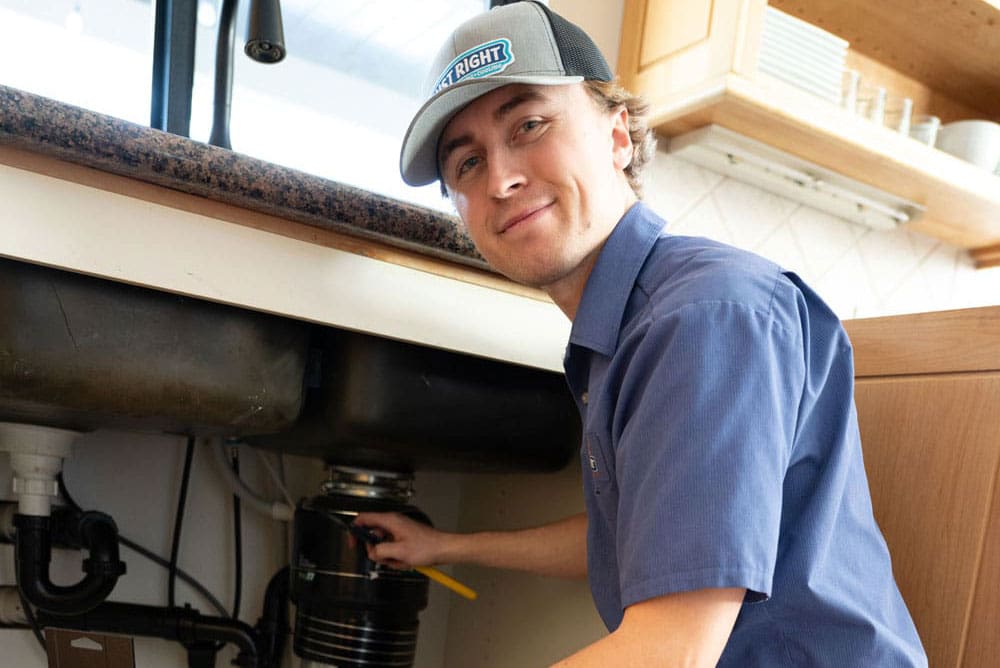
Ready for clogged drain service in Salt Lake City
For clogged drain service Salt Lake City property owners can count on, Just Right Plumbing provides hydro-jetting, rooter service, drain cleaning, video camera pipe inspection, pipe descaling, clogged drain repair, sewer line repair, and trenchless sewer repair from Sugar House to Federal Heights and across the 84101, 84102, 84103, 84105, 84106, 84108, 84109, and 84111 zip codes. Request a consultation or book a repair with the Licensed, Bonded, and Insured team. NATE-Certified Technicians handle both HVAC and plumbing, support 24/7 Emergency Response, and provide Upfront Flat-Rate Pricing with a 100% Satisfaction Guarantee. The company is BBB Accredited and Google Guaranteed. Call or schedule online to clear the line, confirm the fix, and protect the property.
Just Right Plumbing, Heating & Cooling
Website: https://justrightair.com
Phone: +1 801-302-1154
Our Locations
Main Office:2990 S 460 W,
Salt Lake City, UT 84115 Downtown SLC Satellite:
231 E 400 S, Unit 104B, Salt Lake City, UT 84111 Layton Branch:
3146 N Fairfield Rd, Layton, UT 84041
Hours of Operation
- Monday - Friday: 7:30am – 6:00pm
- Saturday: 8:00am – 4:00pm
- Phone Hours: 24/7
Utah Licenses: 12304429-5501 / 12343294-0151 / 14523170-0151